Rural Digitization
The Strategic Leap;
Rural India is no longer waiting for physical infrastructure. Through DPI (Digital Public Infrastructure), villages are connecting directly to global markets.
Key Opportunity Areas:
**Agri-Tech:** Smart supply chains for smallholder farmers.
**Ed-Tech:** Direct-to-consumer learning in regional languages.
**Fin-Tech:** Micro-lending powered by India Stack.
I. Introduction: The Death of the “Last Mile”
For decades, rural India was framed as the “Last Mile”—the hardest, most expensive, and most complex segment to reach. It symbolized infrastructural gaps, fragmented markets, and systemic inefficiencies. Policy, capital, and innovation traditionally flowed from urban centers outward, treating rural inclusion as a downstream challenge.
That paradigm has now decisively shifted.

In India’s journey toward a $10 trillion economy, rural is no longer the “last mile”—it is the first priority. What has catalyzed this transformation is not merely the expansion of physical infrastructure, but the rise of Digital Public Infrastructure (DPI), which has collapsed distances in ways roads and railways never could.
Digitization in rural India is not about connectivity alone. It is about compressing economic distance—enabling a farmer in a remote village to access the same markets, financial systems, and opportunities as an entrepreneur in Mumbai. The village is no longer peripheral; it is becoming structurally central to India’s growth story.
II. The DPI Multiplier
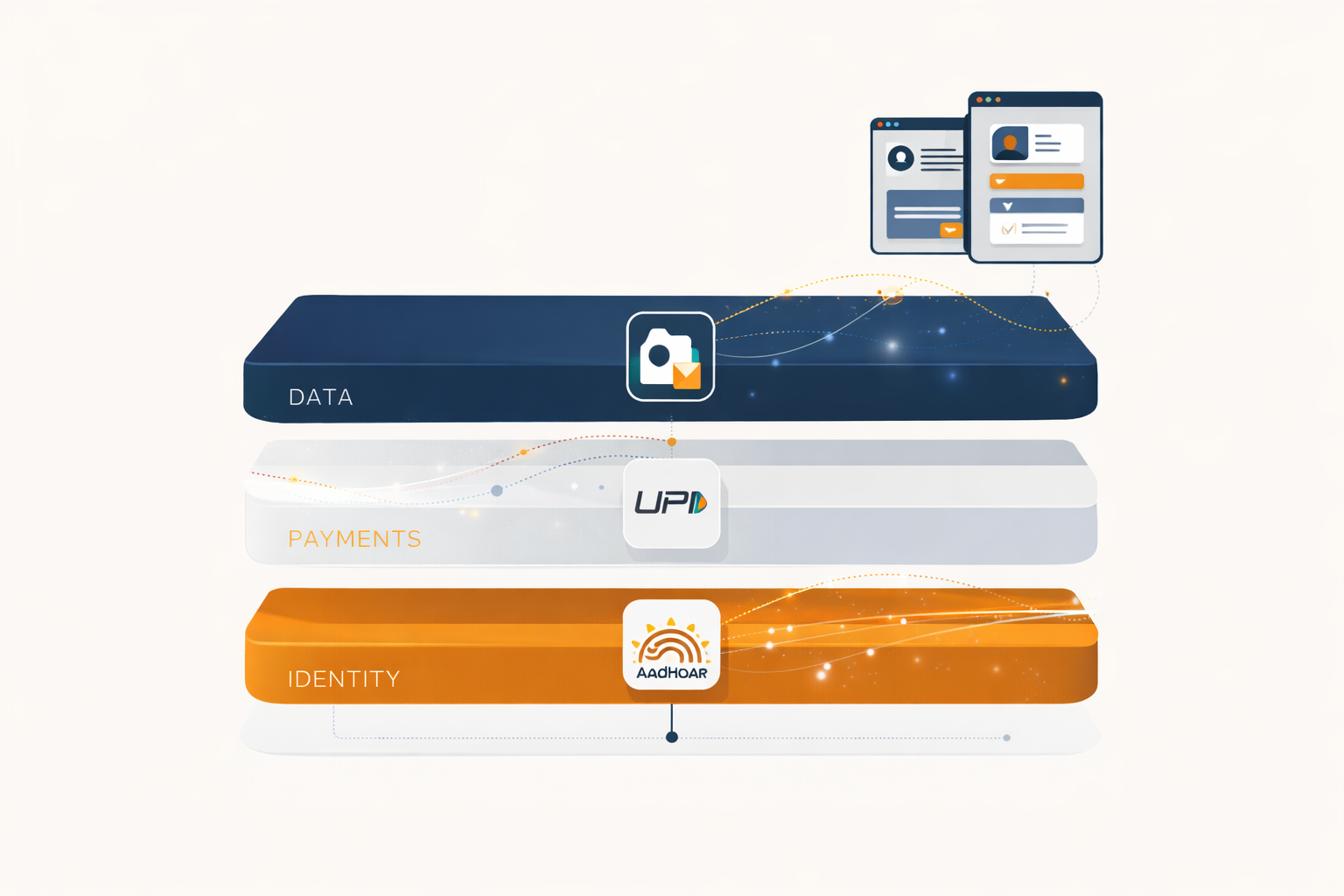
At the heart of this transformation lies a largely invisible but profoundly powerful layer: India Stack. Comprising Aadhaar (identity), UPI (payments), and DigiLocker (documentation), this digital backbone has solved two of the most fundamental constraints in rural economies—identity and trust in transactions.
Historically, the absence of verifiable identity and reliable payment systems excluded millions from formal economic participation. DPI has eliminated this bottleneck. Today, a rural entrepreneur can open a bank account, receive payments, access government schemes, and establish financial credibility—all through a smartphone.
This represents a structural shift. A small trader in a village now operates on the same financial “operating system” as a CEO in a metropolitan city. The implications are profound: frictionless payments, transparent records, and access to credit are no longer urban privileges.
Strategically, this marks a transition from dependence on physical infrastructure (roads, pipes, logistics) to a model anchored in Digital Public Infrastructure. While physical infrastructure builds access, DPI builds participation and scale. It transforms rural citizens from passive recipients into active economic agents.
III. Deep Dive: The Three Pillars of Rural Opportunity
- **Pillar 1: Agri-Stack & Precision Farming**
Agriculture, which employs a significant portion of India’s population, is undergoing a quiet but fundamental transformation. The emergence of Agri-Stack and digital platforms is shifting farming from subsistence to “Yield as a Service.”
Farmers now have access to real-time data on weather patterns, soil health, and market prices. This enhances decision-making, reduces uncertainty, and improves productivity. Platforms like ONDC are further democratizing access to markets, enabling farmers to bypass intermediaries and sell directly to buyers.
The result is price transparency, better margins, and reduced volatility. Agriculture is no longer just about production—it is becoming a data-driven enterprise.
- **Pillar 2: The Sachetization of Services**
One of the most powerful shifts in rural digitization is the “sachetization” of services—delivering high-value services in small, affordable, and accessible formats.
In education, EdTech platforms are offering modular, vernacular content tailored to rural learners. A student in a village can now access high-quality instruction in their local language, often at a fraction of traditional costs.
In healthcare, telemedicine platforms are bridging the gap between rural patients and urban specialists. Consultations, diagnostics, and follow-ups can now happen remotely, significantly reducing both cost and travel barriers.
This model aligns with the economic realities of rural consumers—low-ticket, high-frequency, and value-driven consumption. It transforms access from episodic to continuous, and from centralized to distributed.
- **Pillar 3: The Consumption Boom**
Rural India is no longer a market defined by basic necessities. With rising incomes, improved access, and increased exposure, the 600,000 villages of India are emerging as a major consumption engine.
Aspirational demand is rising—not just for essentials, but for discretionary products, branded goods, and digital services. Smartphones, appliances, financial products, and lifestyle offerings are increasingly penetrating rural markets.
This shift is driven by a combination of factors: digital exposure, improved logistics, and the normalization of digital payments. Rural consumers are not just catching up—they are reshaping demand patterns.
For businesses, this represents a massive opportunity. The next wave of growth will not come from saturated urban markets, but from unlocking rural consumption at scale.
IV. The Founder’s Perspective: Building for “Scale-First”
Building for rural India requires a fundamentally different design philosophy.
Successful founders in this space do not create “lite” versions of urban products. Instead, they design “Offline-First” and “Voice-First” platforms that align with the realities of rural usage—intermittent connectivity, low digital literacy, and linguistic diversity.
The key challenge is not technology—it is trust.
In rural ecosystems, trust is built through community validation, consistent experience, and transparent transactions. Digitization plays a critical role here by creating a digital audit trail. Every transaction, payment, and interaction becomes a data point that builds credibility.
This has a powerful downstream effect: it enables access to formal credit and financial services. Individuals who were previously “invisible” to the financial system can now establish a verifiable economic identity.
For founders, the opportunity is not incremental—it is exponential. The design mandate is clear: build for scale from day one, not by simplifying, but by reimagining the user experience.
V. Counter-Intuitive Insights
Two emerging trends challenge conventional assumptions.
First, talent is moving outward, not inward. Digitization is enabling professionals to work from Tier 3 cities and even villages, giving rise to the concept of the “Silicon Village.” This decentralization of talent has implications for productivity, cost structures, and regional development.
Second, rural digitization is accelerating the green transition. Digital tools are enabling efficient resource use in agriculture, reducing waste, and promoting sustainable practices. In many cases, rural India is leapfrogging directly into environmentally efficient models, bypassing the inefficiencies of traditional industrialization.
VI. Conclusion: The Blueprint for 2030
India’s $10 trillion ambition is unattainable without the digital empowerment of its bottom 60%. Rural digitization is not a supporting pillar—it is the foundation of inclusive growth.
The strategic imperative is clear: success in India now demands a “Rural-Digital” strategy, not just an “Urban-Premium” one.